
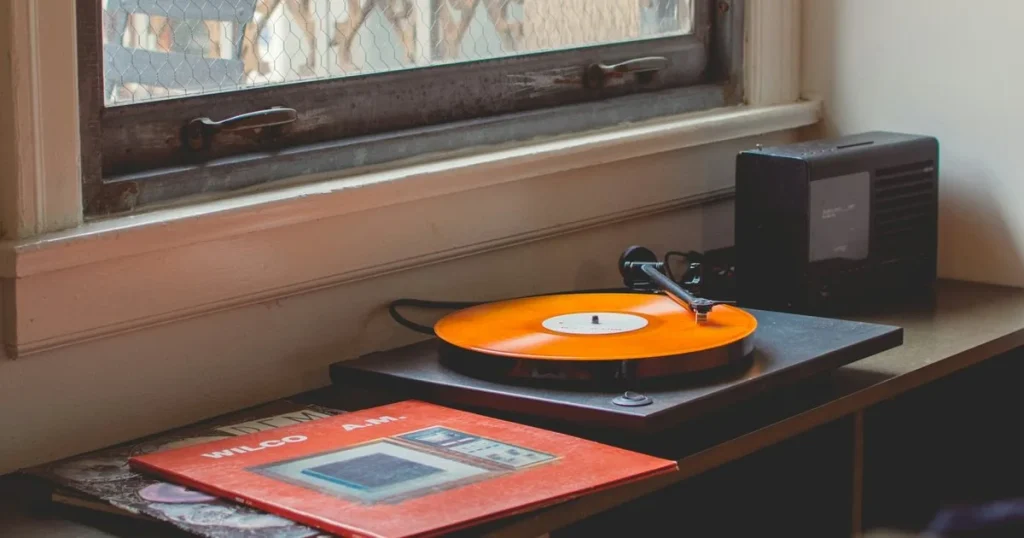
Shopping for a turntable is weirdly stressful for something that spins a plate in a circle. There are hundreds of models, a thousand opinions, and a guy online who insists you can’t enjoy music without a $4,000 deck. You can. Ignore him.
The right turntable depends on three things: what you plan to plug it into, how much hands-on effort you want, and whether you’ll want to upgrade it later. Get those right and almost any decent deck at your budget will make you happy. Get them wrong and you’ll own a very nice turntable that doesn’t work with your speakers.
Here’s how to sort it out, then a pick for each situation we see most often.
The short version
| If you want… | Look at | Roughly |
|---|---|---|
| Press play and listen, on a tight budget | Audio-Technica AT-LP60X or AT-LP70X | $180 to $250 |
| A real turntable that plugs into almost anything | Fluance RT81+ | $300 to $350 |
| Direct drive, USB ripping, or 78 rpm records | Audio-Technica AT-LP120XUSB | $350 to $400 |
| A hi-fi system you’ll grow into | Rega Planar 1, U-Turn Orbit Plus, or Pro-Ject Debut Evo 2 | $400 to $800 |
| One deck to keep for a decade | Technics SL-1500C | $1,300 to $1,500 |
| DJing, or tinkering with everything | Technics SL-1200MK7 | $1,300 |
Want to compare more than these? Our Turntable Guide lines up 46 models with specs, published review scores, and Amazon price history. Keep it open in another tab while you read.
Five questions that decide almost everything
1. What is it plugged into?
This one trips up more first-time buyers than anything else. A turntable’s signal is tiny and needs a boost, called phono amplification, before a normal speaker or amp can use it. That boost comes from one of three places:
- Built into the turntable. Easiest. Plug it into powered speakers or a Bluetooth speaker and go. Many have a Phono/Line switch so you can turn the built-in stage off later.
- Built into your receiver or amp. Look for an input labeled “Phono”. If you have one, you don’t need anything extra.
- A separate phono preamp. A small box that sits between the turntable and your amp. Required if your turntable lacks a preamp and your amp lacks a phono input. Shop for a phono preamp and budget for it.
Skipping this check is how people end up with a turntable on the counter and no sound. If you’re not sure what your gear has, check the back panel before you buy anything. The Turntable Guide can filter to models with a built-in preamp.
2. Automatic or manual?
Fully automatic decks start, lower the needle, lift it at the end, and return the arm, all from one button. They’re friendly, they protect the needle if you fall asleep halfway through side two, and they’re a great fit for gifts and for anyone who just wants to listen. Manual decks make you cue the arm yourself. That takes about three days to feel natural and gives you more control (and a satisfying little ritual). Semi-automatic models sit in between, typically lifting the arm and stopping the platter when the record ends.
Neither is better. Pick the one you’ll actually enjoy using at 11 p.m.
3. Belt drive or direct drive?
Belt-drive decks use a rubber belt between the motor and the platter, which keeps motor noise away from the record. Most home turntables are belt drive. Direct-drive decks put the motor right under the platter. They get up to speed fast, hold it well, and are the standard for DJs. Both can sound great. Crutchfield’s buying guide calls it a matter of personal preference, and we agree. Don’t pick a turntable for this reason alone.
4. Can you upgrade the cartridge?
The cartridge and stylus are the parts that touch the groove, and they wear out. Cheaper decks often use an integrated cartridge: you can replace the stylus (the needle part), but not the whole cartridge. That’s fine, and some stylus upgrades are cheap, but your options are limited. Mid-priced decks usually take a standard cartridge, so you can swap in something better down the road. Our guide to upgrading your vinyl setup has the full rundown.
5. Do you need extras?
Bluetooth lets you send audio to wireless speakers or headphones. It’s convenient, and perfectly good for background listening, but the signal is compressed on its way out, so it’s not how you’ll hear your records at their best. USB output lets you digitize records to a computer. If you aren’t going to use either, don’t pay for them. If you will, say so up front and shop for them.
What to skip
The briefcase-style player with built-in speakers, a lid that closes, and a price under $100 is the one thing we’d steer you away from. The usual problems are tracking force well above the 1.5 to 2.5 grams that’s generally considered safe for most modern cartridges, and a cartridge and stylus you can’t replace. Some of these models reportedly track at several times that, which is hard on records. The built-in speakers are small and tinny too.
You don’t have to spend much to leave that category. A turntable that’s set up for a sensible tracking force and has a replaceable stylus starts around $180, and that’s the baseline for every pick below.
Picks by situation and budget
Just starting out, under about $250: Audio-Technica AT-LP60X or AT-LP70X
If you want to plug in and play without learning a vocabulary, these are the easy answers. Both are fully automatic belt-drive decks with a switchable built-in phono preamp. The Audio-Technica AT-LP60X lists at $179. The Audio-Technica AT-LP70X costs a bit more and uses an AT-VM95C cartridge, and What Hi-Fi? called its performance impressive for the price.
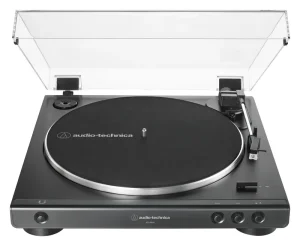
A fully automatic belt-drive turntable with a switchable built-in phono preamp. Plug it in and play.
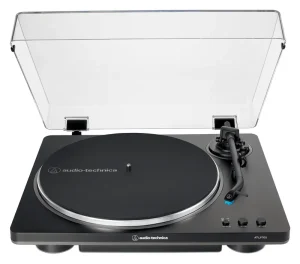
A fully automatic belt-drive deck that costs a bit more than the LP60X and adds an AT-VM95C cartridge.
The trade-offs: they’re mostly plastic, the cartridge is integrated (you can upgrade the stylus, such as the elliptical ATN3600LE for the LP60X, but not the whole cartridge), and on the LP70X the anti-skate is fixed. If you think you’ll catch the hobby bug, step up one tier. If you just want to hear your records, this is plenty. See both in the Guide: AT-LP60X and AT-LP70X.
A real turntable that works with anything, $300 to $350: Fluance RT81+
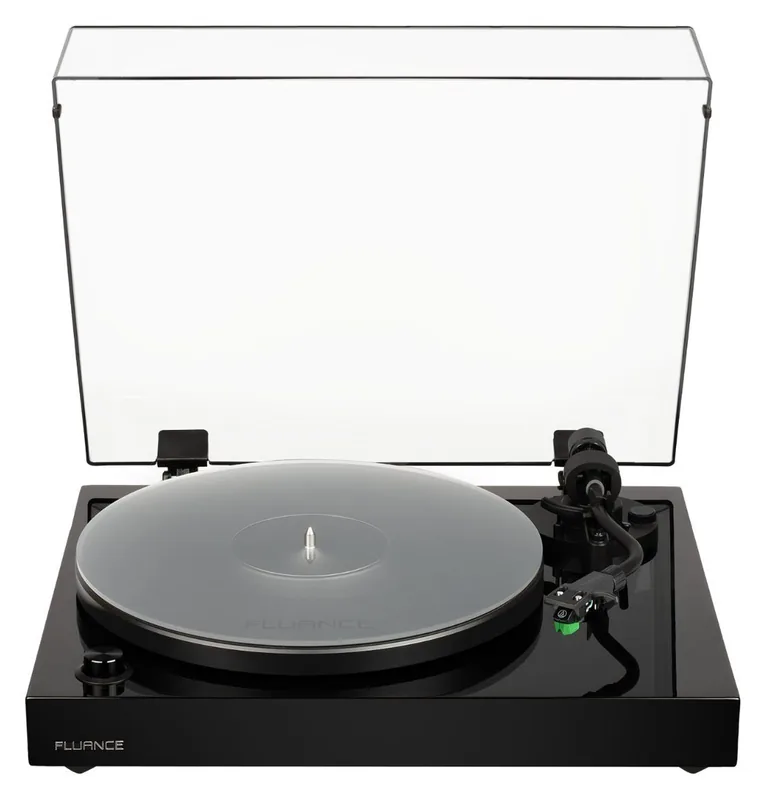
This is the one we’d point most beginners toward if they can stretch a little. The Fluance RT81+ ships with an Audio-Technica AT-VM95E cartridge (the same one we mention in our upgrade guide), a switchable built-in phono preamp, and an auto-stop that halts the platter at the end of a side. Tom’s Guide found setup took about five minutes, with the belt the fiddliest part.
The trade-offs: no Bluetooth or USB, and the stock acrylic mat isn’t great. You can leave the built-in preamp on for powered speakers, or switch it off and use a receiver’s phono input later, so the deck grows with you. See it in the Guide.
Direct drive, digitizing, or 78s, about $350 to $400: Audio-Technica AT-LP120XUSB
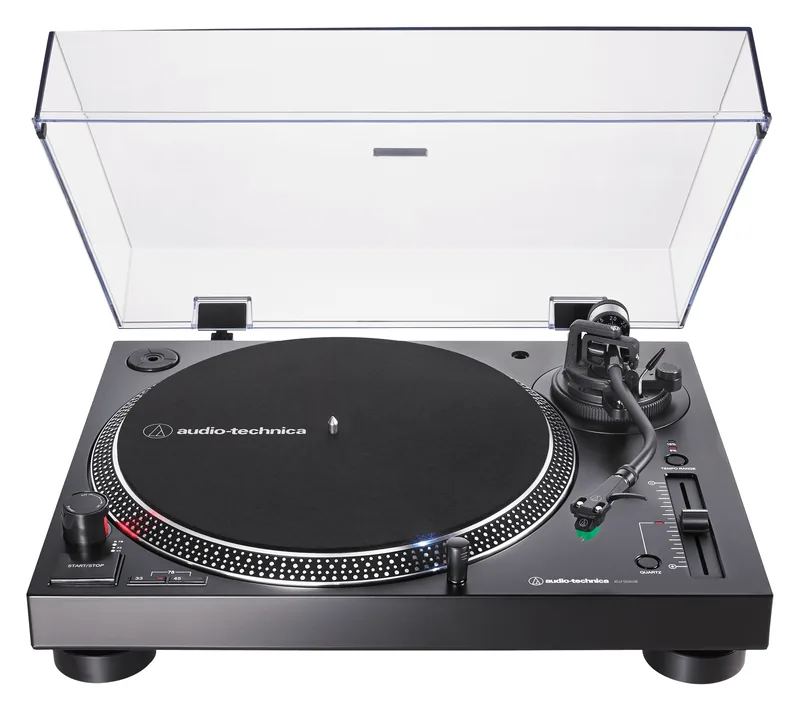
The Audio-Technica AT-LP120XUSB is a manual, direct-drive deck with a switchable built-in preamp, an AT-VM95E cartridge, adjustable anti-skate, a detachable headshell, and a pitch control. It plays 33, 45, and 78 rpm, and its USB output records at 16-bit, 44.1 or 48 kHz. Crutchfield names it their pick for digitizing records.
The trade-offs: it’s a full-size deck, so you need a sturdy spot, and USB recording may need software you download yourself. If you have a stack of 78s, know that those generally want a different stylus than LPs do, so plan for a second one. See it in the Guide.
Building a proper hi-fi system, about $400 to $800
In this range, many turntables skip the built-in preamp on purpose. The idea is that you pair them with a receiver that has a phono input or a good separate preamp, and put the money into the arm and the motor. Three we like, each for a different type of person:
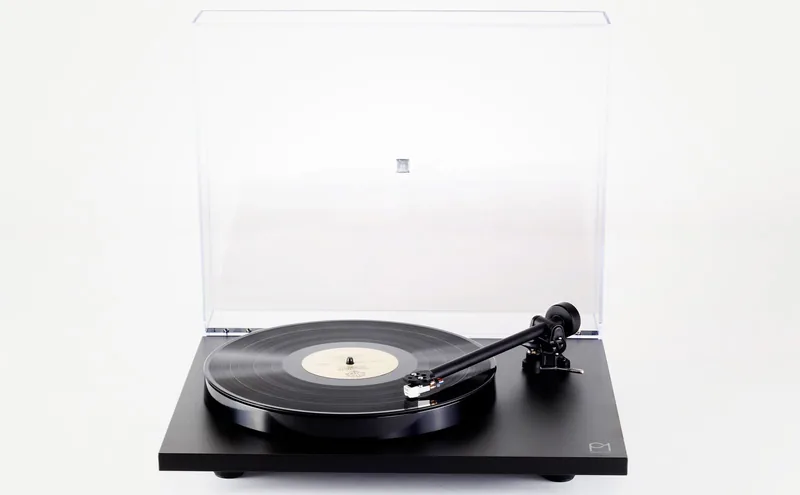
Rega Planar 1, $595. The Rega Planar 1 is TechRadar’s pick for best turntable overall. It comes with the Rega Carbon cartridge, a simple preset tonearm, and fast setup. The drawbacks: no built-in preamp, and you change speed by moving the belt by hand. If you want a built-in preamp, the Planar 1 Plus is about $725, and What Hi-Fi? found it more enjoyable than a Planar 1 with a separate phono stage. Just know that you can’t switch that preamp off. See it in the Guide.
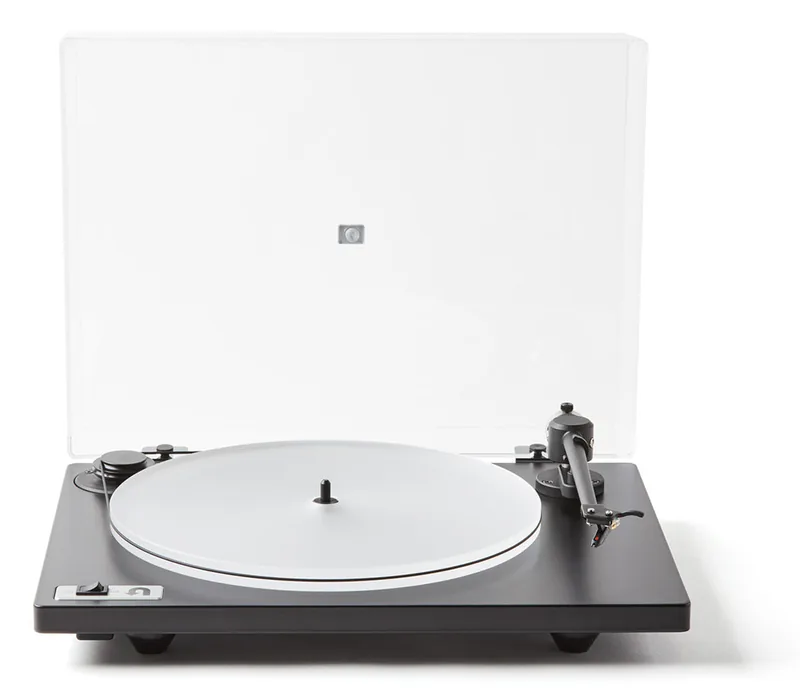
U-Turn Orbit Plus, $399 and up. The U-Turn Orbit Plus is a manual belt-drive deck that comes with an Ortofon OM5E cartridge. It starts at $399 without a preamp, or $479 with one built in, and you pick colors and finishes when you order. Speed changes by moving the belt, and it comes with a three-year warranty. It’s an easy one to personalize and a good fit for people who care about how it looks on the shelf. See it in the Guide.
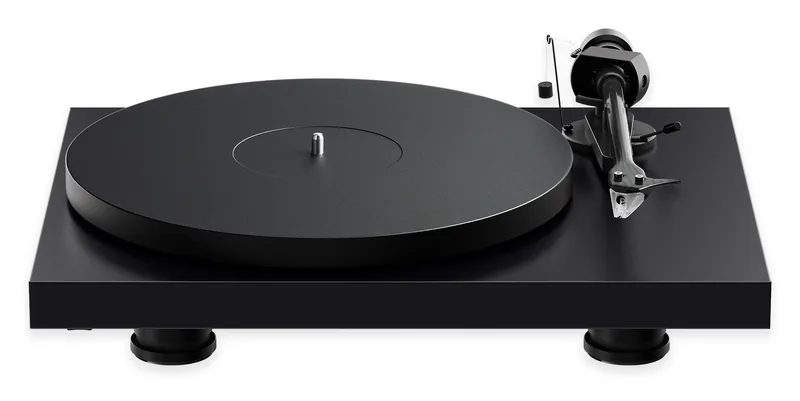
Pro-Ject Debut Evo 2, $799. The Pro-Ject Debut Evo 2 has a carbon-fiber tonearm, a Pick-It MM Evo cartridge, and an electronic speed switch, so no belt-moving. What Hi-Fi? called the sound open, smooth, and especially good with voices and piano, though they found the Rega Planar 2 more rhythmically precise at similar money. The aluminum platter also leaves the door open to a moving-coil cartridge later. It has no phono stage. See it in the Guide.
The one you keep for a decade, about $1,300 to $1,500: Technics SL-1500C
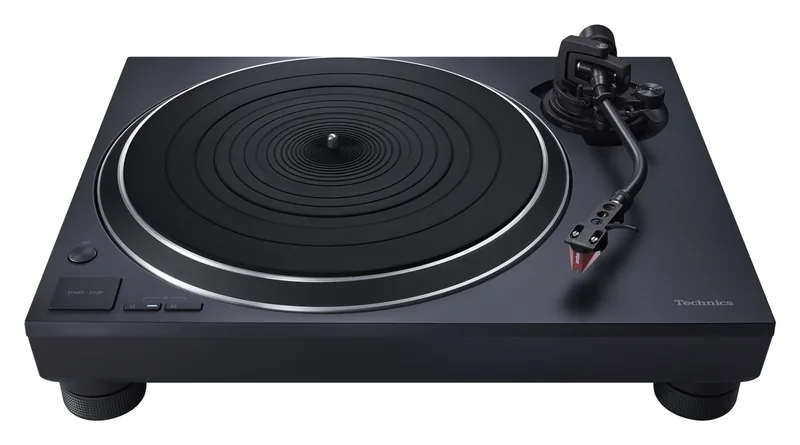
The Technics SL-1500C is a direct-drive, semi-automatic deck that comes with an Ortofon 2M Red cartridge and a built-in phono stage you can bypass later. Crutchfield names it their best direct-drive pick, and What Hi-Fi? called it “defined, insightful and musical” (though they thought the Rega Planar 3 offered more insight and dynamics). It’s a good choice if you want it set up quickly, don’t want to tinker, and expect to keep it for a long time.
DJing or tinkering: Technics SL-1200MK7
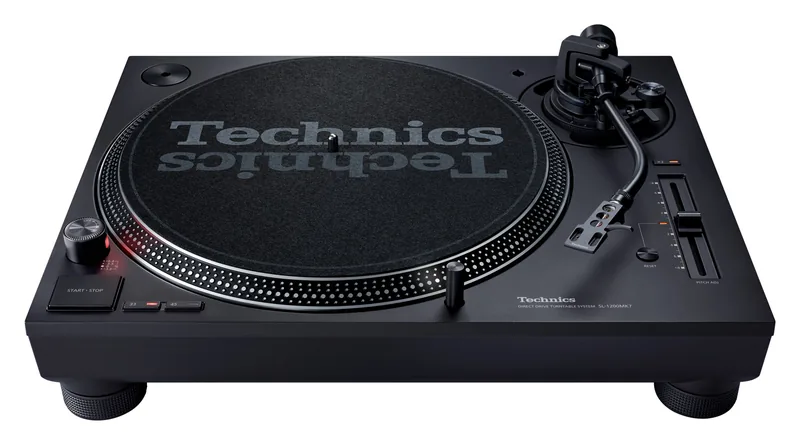
The Technics SL-1200MK7 is the classic DJ deck, with a pitch slider and strobe lights. It comes with no cartridge and no phono stage, so budget for both. You’ll spend more than the price tag suggests, but you get a deck with a huge aftermarket following.
Want Bluetooth?
Several of the decks above have Bluetooth versions, including the AT-LP70XBT and AT-LP60XBT. You can filter the Turntable Guide to Bluetooth models.
Don’t forget the rest of the system
A turntable is one link in a chain. A $400 deck into speakers that cost $30 will sound like a $30 pair of speakers. If your budget is fixed, it often makes sense to spend a bit less on the deck and make sure your speakers and amp don’t hold it back. If you’re thinking about the whole chain, our guide to upgrading your vinyl setup covers the order to do it in.
What about used?
A used turntable can be a great deal, but it carries risks that a new one doesn’t. Check that the platter spins evenly, the belt (if it has one) isn’t stretched or sticky, the tonearm moves freely, and the stylus is in good shape, since a worn stylus is easy to overlook and not free to replace. If a used deck has a replaceable cartridge, budget for a new stylus anyway. If you aren’t sure what you’re looking at, a new entry-level deck from the list above is usually safer.
Still not sure?
Start with the questions at the top. Know what you’re plugging into, decide on automatic or manual, and set a budget. Then use the Turntable Guide to compare what’s available at that price, with current Amazon pricing so you can tell a good deal from a normal one. Or jump to your range: under $200, $200 to $399, $400 to $599, $600 to $999, or $1,000 and up.
The Guide’s scores come from specs and published reviews, not our own testing, so use them to narrow the list rather than to pick a winner. Then go put on a record.
FAQ
How much should I spend on my first turntable?
For most people, somewhere between $250 and $600 is a good range. Under that you can still get a perfectly good automatic deck like the AT-LP60X, but you’ll have fewer upgrade options. Above that, you’re paying for better materials and finer adjustment, which matters more once you have good speakers and a good amp.
Do I need a separate phono preamp?
Only if neither your turntable nor your amp or receiver has one. A turntable with a built-in preamp can plug into powered speakers directly. A receiver with a “Phono” input can handle it for you. If you have neither, you’ll need a separate phono preamp.
Are belt-drive or direct-drive turntables better?
Neither is better across the board. Belt-drive decks are the norm for home listening and keep motor noise away from the record. Direct-drive decks start and hold speed quickly and are the standard for DJs. Both can sound excellent, so choose based on features and price.
Is a cheap suitcase record player bad for my records?
Many of them track much heavier than the 1.5 to 2.5 grams that’s generally considered safe, and the stylus can’t be replaced. That’s hard on records. A basic deck built around a sensible tracking force and a replaceable stylus, like the Audio-Technica AT-LP60X, costs a bit more and is a safer start.
Should I buy an automatic or manual turntable?
Automatic models start, stop, and return the arm for you, which makes them easy and gentle on forgetful listeners. Manual models give you more control and a more hands-on feel. Pick based on how you like to listen. Semi-automatic models fall in between and usually lift the arm at the end of a side.